Hound dog breed
Basenji
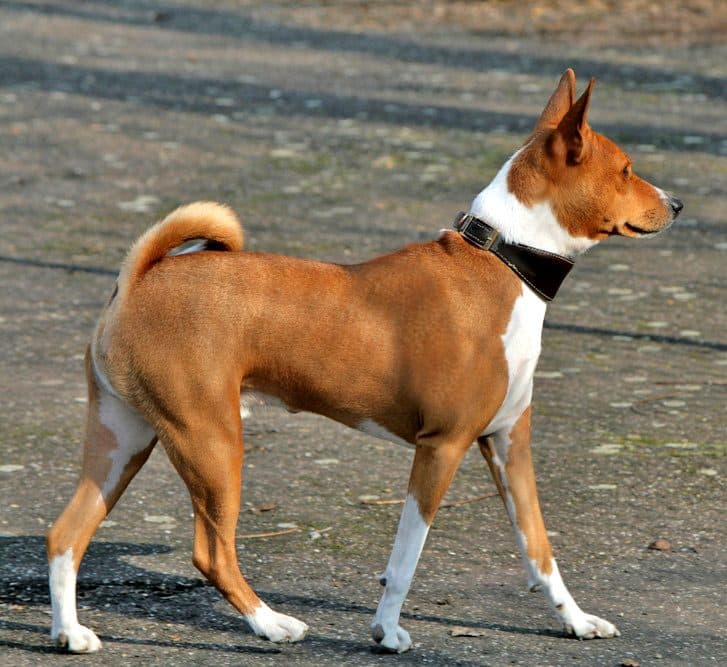
The Basenji is a medium hound breed with a typical lifespan of 10 to 12 years.
Reviewed to our editorial standards · Updated
- Size
- Medium
- Height
- 16 to 17 inches
- Weight
- 22 to 24 pounds
- Life span
- 10 to 12 years
- Group
- Hound
History and purpose
An ancient hunting dog from the Congo basin of Central Africa, used to flush game into nets. Images of similar dogs appear in ancient Egyptian art.
An adult Basenji usually stands 16 to 17 inches and weighs 22 to 24 pounds. Known as the barkless dog: it makes a yodel-like sound called a barroo instead of barking, and it grooms itself like a cat.
Temperament
This is a people-focused dog that wants to be part of whatever the family is doing. Children tend to be a highlight for the Basenji, which is usually tolerant of noise and fuss. It generally enjoys the company of other dogs.
Most Basenjis greet visitors as friends, so don't count on it as a guard dog. It is a fairly quiet dog. A strong prey drive means it may chase cats, squirrels and small pets, so use a lead near wildlife.
Exercise, grooming and training
A tired Basenji is a well-behaved one: count on long daily outings plus training or games that work its brain. It handles time alone better than many dogs.
Its coat is low-maintenance; a weekly once-over with a brush is plenty. It sheds very little.
It can be stubborn, so keep training sessions short, consistent and rewarding. Puppies are especially mouthy, so provide chew toys and teach bite inhibition early.
It feels the cold and may need a coat in winter.
Work out their needs with the free calorie calculator, exercise calculator and water intake calculator.
Health and lifespan
Owners and breeders watch for Fanconi syndrome, progressive retinal atrophy, hypothyroidism and immunoproliferative enteropathy.
Typical life expectancy is 10 to 12 years. If you buy a puppy, ask to see the parents' eye test results.
- Fanconi syndrome
- Progressive retinal atrophy
- Hypothyroidism
- Immunoproliferative enteropathy
Ratings
Scored 1 to 5, where 5 is the most. Individual dogs vary.
Living with it
- Adaptability
- 3/5
- Apartment living
- 5/5
- Good for first-time owners
- 1/5
- Sensitivity
- 3/5
- Copes with being alone
- 4/5
- Copes with cold
- 1/5
- Copes with heat
- 4/5
Friendliness
- Affection with family
- 5/5
- Good with kids
- 5/5
- Good with other dogs
- 4/5
- Friendly with strangers
- 5/5
Coat and health
- Shedding
- 1/5
- Drooling
- 1/5
- Easy to groom
- 5/5
- General health
- 2/5
- Tendency to gain weight
- 2/5
Training and behaviour
- Easy to train
- 1/5
- Intelligence
- 4/5
- Mouthiness
- 5/5
- Prey drive
- 5/5
- Barking
- 1/5
- Tendency to roam
- 5/5
Exercise
- Energy
- 5/5
- Intensity
- 1/5
- Exercise needs
- 5/5
- Playfulness
- 2/5
Is the Basenji right for you?
Often a good fit for
- Active people who hike, run or do dog sports
- Families with children
- Owners who work some days away from home
- People who want a dog that sheds little
Less suited to
- First-time owners
- Homes that can manage only short daily walks
- Homes with cats or small pets, unless raised together
Thinking of adopting? Read our guide to adopting a rescue or browse adoption on Hushku.
Basenji questions
What was the Basenji originally bred for?
An ancient hunting dog from the Congo basin of Central Africa, used to flush game into nets. Today, known as the barkless dog: it makes a yodel-like sound called a barroo instead of barking, and it grooms itself like a cat.
What health problems do Basenjis have?
Fanconi syndrome, progressive retinal atrophy, hypothyroidism and immunoproliferative enteropathy are the conditions most associated with the Basenji. Ask a breeder for the parents' eye test results before you commit.
Is the Basenji good with kids?
Usually, yes. The Basenji is rated 5 out of 5 for getting along with children.
How much exercise does a Basenji need?
Plan on 90 minutes to 2 hours a day. With energy 5 out of 5 and exercise needs 5 out of 5, it does well with scent games and long, varied walks on a lead.
Does the Basenji shed?
Very little: it rates 1 out of 5 for shedding and 5 out of 5 for ease of grooming. Low shedding doesn't mean no grooming; many low-shedding coats need clipping.
Is the Basenji a good dog for first-time owners?
It is usually better with an experienced owner, because of its energy, an independent streak in training and a strong prey drive. A first-time owner who still wants one should budget for a training class from day one.
How big does a Basenji get?
Adults typically stand 16 to 17 inches and weigh 22 to 24 pounds (about 10 kg on average), which makes it a medium dog. Males are usually larger than females.
Own a Basenji?
Keep their reminders, weight and health records in Hushku, and find playmates nearby.
