Sporting dog breed
Curly-Coated Retriever
The Curly-Coated Retriever is a large sporting breed with a typical lifespan of 9 to 12 years.
Reviewed to our editorial standards · Updated
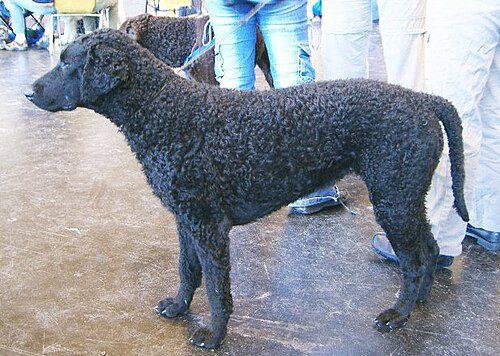
- Size
- Large
- Height
- 23 inches to 27 inches
- Weight
- 65 to 100 pounds
- Life span
- 9 to 12 years
- Group
- Sporting
History and purpose
One of the oldest retriever breeds, developed in England in the early 1800s, probably from old water dogs and retrieving setters. It was a favourite of English gamekeepers.
A typical adult stands 23 inches to 27 inches and weighs 65 to 100 pounds. Its tight curls are water-resistant and should not be brushed out.
Temperament
The Curly-Coated Retriever is very affectionate and likes to be close to its people. Families with children often find it gentle and tolerant, provided kids learn to respect its space. It generally enjoys the company of other dogs.
With strangers it is polite rather than effusive and warms up given time. It barks to alert you but isn't usually a nuisance barker. A strong prey drive means it may chase cats, squirrels and small pets, so use a lead near wildlife.
Exercise, grooming and training
This is an athletic dog that needs a lot of daily exercise, ideally with a job such as fetch, scent games or dog sports. It copes with a few hours alone once it is used to it.
Brushing once or twice a week keeps the coat in good order. Shedding is moderate.
Training is usually a pleasure: the Curly-Coated Retriever learns fast and likes having something to do. Puppies are especially mouthy, so provide chew toys and teach bite inhibition early.
Work out their needs with the free calorie calculator, exercise calculator and water intake calculator.
Health and lifespan
Owners and breeders watch for hip and elbow dysplasia, glycogen storage disease, exercise-induced collapse and pattern alopecia.
Typical life expectancy is 9 to 12 years. If you buy a puppy, ask to see the parents' hip and elbow scores.
- Hip and elbow dysplasia
- Glycogen storage disease
- Exercise-induced collapse
- Pattern alopecia
Ratings
Scored 1 to 5, where 5 is the most. Individual dogs vary.
Living with it
- Adaptability
- 2/5
- Apartment living
- 1/5
- Good for first-time owners
- 3/5
- Sensitivity
- 3/5
- Copes with being alone
- 3/5
- Copes with cold
- 4/5
- Copes with heat
- 4/5
Friendliness
- Affection with family
- 5/5
- Good with kids
- 5/5
- Good with other dogs
- 4/5
- Friendly with strangers
- 3/5
Coat and health
- Shedding
- 3/5
- Drooling
- 2/5
- Easy to groom
- 3/5
- General health
- 2/5
- Tendency to gain weight
- 3/5
Training and behaviour
- Easy to train
- 4/5
- Intelligence
- 5/5
- Mouthiness
- 5/5
- Prey drive
- 5/5
- Barking
- 3/5
- Tendency to roam
- 4/5
Exercise
- Energy
- 5/5
- Intensity
- 3/5
- Exercise needs
- 4/5
- Playfulness
- 5/5
Is the Curly-Coated Retriever right for you?
Often a good fit for
- Active people who hike, run or do dog sports
- Families with children
Less suited to
- Homes that can manage only short daily walks
- Small apartments without a garden
- Homes with cats or small pets, unless raised together
Thinking of adopting? Read our guide to adopting a rescue or browse adoption on Hushku.
Curly-Coated Retriever questions
What was the Curly-Coated Retriever originally bred for?
One of the oldest retriever breeds, developed in England in the early 1800s, probably from old water dogs and retrieving setters. Today, its tight curls are water-resistant and should not be brushed out.
What health problems do Curly-Coated Retrievers have?
Hip and elbow dysplasia, glycogen storage disease, exercise-induced collapse and pattern alopecia are the conditions most associated with the Curly-Coated Retriever. Ask a breeder for the parents' hip and elbow scores before you commit.
Is the Curly-Coated Retriever good with kids?
Usually, yes. The Curly-Coated Retriever is rated 5 out of 5 for getting along with children. At 65 to 100 pounds, an excited adult can knock over a small child, so teach calm greetings early.
How much exercise does a Curly-Coated Retriever need?
Plan on 90 minutes to 2 hours a day. With energy 5 out of 5 and exercise needs 4 out of 5, it does well with retrieving, swimming or running.
Does the Curly-Coated Retriever shed?
A moderate amount: it rates 3 out of 5 for shedding and 3 out of 5 for ease of grooming. A weekly brush keeps loose hair under control.
Is the Curly-Coated Retriever a good dog for first-time owners?
It can work for a well-prepared first-time owner. The main challenges are its size (about 37 kg on average), its energy and a strong prey drive.
How big does a Curly-Coated Retriever get?
Adults typically stand 23 inches to 27 inches and weigh 65 to 100 pounds (about 37 kg on average), which makes it a large dog. Males are usually larger than females.
Own a Curly-Coated Retriever?
Keep their reminders, weight and health records in Hushku, and find playmates nearby.
