Mixed breed
Dorgi
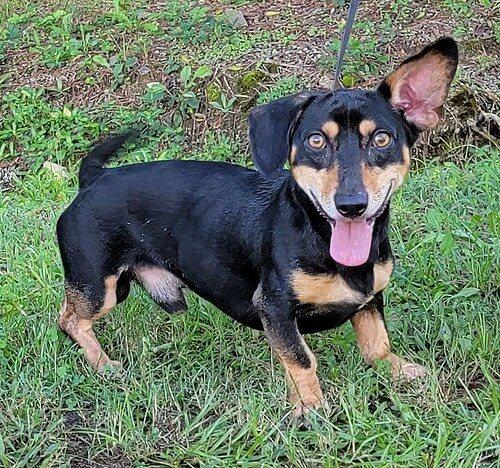
The Dorgi is a cross between the Dachshund and the Pembroke Welsh Corgi, usually small in size and living 12 to 15 years.
Reviewed to our editorial standards · Updated
- Size
- Small
- Height
- 9 to12 inches
- Weight
- 15 to 28 pounds
- Life span
- 12 to 15 years
- Group
- Mixed Breed
- Parent breeds
- Dachshund and Pembroke Welsh Corgi
About the Dorgi
The Dorgi is a cross between the Dachshund and the Pembroke Welsh Corgi. As with any mix, puppies can take after either parent, so size, coat and temperament vary more than in a pedigree breed.
Fully grown, the Dorgi stands 9 to12 inches and weighs 15 to 28 pounds.
The parent breeds
- Dachshund
Bred in Germany from the 1600s to hunt badgers; the name means badger dog.
- Pembroke Welsh Corgi
A Welsh herding dog descended from dogs brought by Flemish weavers in the 1100s, used to drive cattle.
Temperament
This is a people-focused dog that wants to be part of whatever the family is doing. With kids it is generally easygoing, and many Dorgis become a child's constant shadow. It generally enjoys the company of other dogs.
With strangers it is polite rather than effusive and warms up given time. It barks to alert you but isn't usually a nuisance barker. Keep an eye on it around small pets until you know how it reacts.
Exercise, grooming and training
Daily exercise is not optional for the Dorgi. Most need a long walk or run every day, and more on weekends. Left alone too long, it may bark, chew or fret, so build up time alone gradually from puppyhood.
Coat care is simple, mostly a weekly brush and the occasional bath. Shedding is minimal.
It is reasonably biddable; short daily sessions work better than long ones. Puppies are especially mouthy, so provide chew toys and teach bite inhibition early.
Work out their needs with the free calorie calculator, exercise calculator and water intake calculator.
Health and lifespan
The Dorgi can inherit conditions from either parent breed. The ones most worth knowing about are intervertebral disc disease, obesity, progressive retinal atrophy and degenerative myelopathy.
Typical life expectancy is 12 to 15 years. If you buy a puppy, ask to see the parents' hip and elbow scores and eye test results. The Dorgi puts on weight easily, so measure meals and go easy on treats.
- Intervertebral disc disease
- Obesity
- Progressive retinal atrophy
- Degenerative myelopathy
- Hip dysplasia
Ratings
Scored 1 to 5, where 5 is the most. Individual dogs vary.
Living with it
- Adaptability
- 3/5
- Apartment living
- 4/5
- Good for first-time owners
- 3/5
- Sensitivity
- 3/5
- Copes with being alone
- 1/5
- Copes with cold
- 4/5
- Copes with heat
- 3/5
Friendliness
- Affection with family
- 4/5
- Good with kids
- 4/5
- Good with other dogs
- 4/5
- Friendly with strangers
- 3/5
Coat and health
- Shedding
- 2/5
- Drooling
- 2/5
- Easy to groom
- 4/5
- General health
- 4/5
- Tendency to gain weight
- 4/5
Training and behaviour
- Easy to train
- 3/5
- Intelligence
- 4/5
- Mouthiness
- 4/5
- Prey drive
- 3/5
- Barking
- 3/5
- Tendency to roam
- 3/5
Exercise
- Energy
- 4/5
- Intensity
- 4/5
- Exercise needs
- 4/5
- Playfulness
- 5/5
Is the Dorgi right for you?
Often a good fit for
- Active people who hike, run or do dog sports
- Families with children
- People who want a dog that sheds little
Less suited to
- First-time owners
- Homes that can manage only short daily walks
- Owners who are out all day
Thinking of adopting? Read our guide to adopting a rescue or browse adoption on Hushku.
Dorgi questions
What two breeds make a Dorgi?
The Dorgi is a cross between the Dachshund and the Pembroke Welsh Corgi. About the Dachshund: Bred in Germany from the 1600s to hunt badgers; the name means badger dog. About the Pembroke Welsh Corgi: A Welsh herding dog descended from dogs brought by Flemish weavers in the 1100s, used to drive cattle.
What health problems do Dorgis have?
Intervertebral disc disease, obesity, progressive retinal atrophy, degenerative myelopathy and hip dysplasia are the conditions most associated with the Dorgi and its parent breeds. Ask a breeder for the parents' hip and elbow scores and eye test results before you commit.
Is the Dorgi good with kids?
Usually, yes. The Dorgi is rated 4 out of 5 for getting along with children. Small dogs can be hurt by rough handling, so teach children to sit on the floor to hold it.
How much exercise does a Dorgi need?
Plan on 90 minutes to 2 hours a day. With energy 4 out of 5 and exercise needs 4 out of 5, it does well with walks and play.
Does the Dorgi shed?
Very little: it rates 2 out of 5 for shedding and 4 out of 5 for ease of grooming. Low shedding doesn't mean no grooming; many low-shedding coats need clipping.
Is the Dorgi a good dog for first-time owners?
It is usually better with an experienced owner, because of its energy. A first-time owner who still wants one should budget for a training class from day one.
How big does a Dorgi get?
Adults typically stand 9 to12 inches and weigh 15 to 28 pounds (about 10 kg on average), which makes it a small dog. Mixes vary more than pedigrees, so the parents' size is the best guide.
Own a Dorgi?
Keep their reminders, weight and health records in Hushku, and find playmates nearby.
