Mixed breed
Puggle
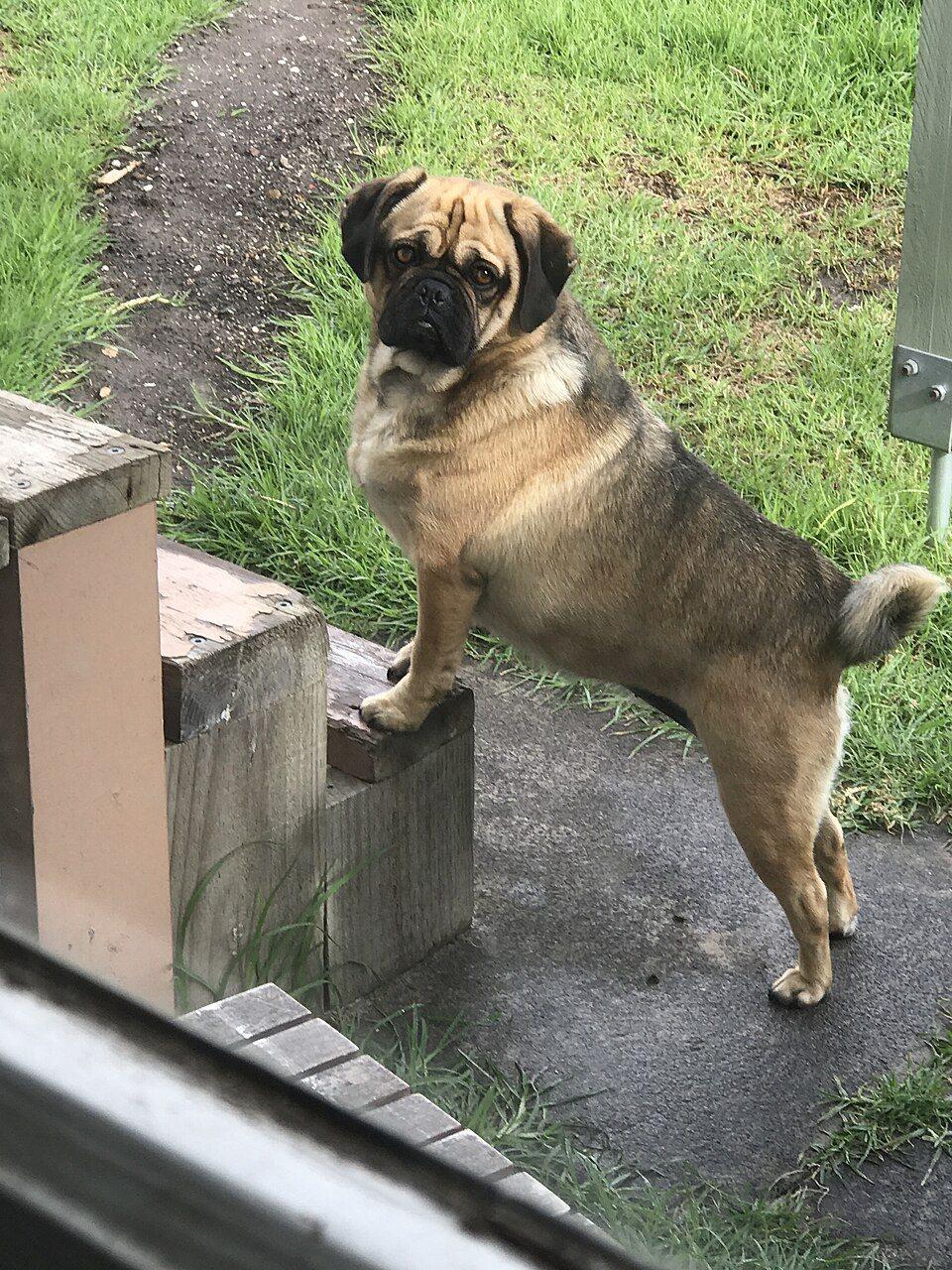
The Puggle is a cross between the Pug and the Beagle, usually medium in size and living 10 to 15 years.
Reviewed to our editorial standards · Updated
- Size
- Medium
- Height
- 13 to 15 inches
- Weight
- 18 to 30 pounds
- Life span
- 10 to 15 years
- Group
- Hybrid
- Parent breeds
- Pug and Beagle
About the Puggle
The Puggle is a cross between the Pug and the Beagle. First bred in Wisconsin in the 1980s by Wallace Havens, who registered the name. It became very popular in the US in the 2000s. As with any mix, puppies can take after either parent, so size, coat and temperament vary more than in a pedigree breed.
An adult Puggle usually stands 13 to 15 inches and weighs 18 to 30 pounds. Its longer muzzle can mean easier breathing than a Pug, but not always.
Temperament
Expect a dog that enjoys company but is also happy to settle on its own. Children tend to be a highlight for the Puggle, which is usually tolerant of noise and fuss. It generally enjoys the company of other dogs.
Most Puggles greet visitors as friends, so don't count on it as a guard dog. It can be vocal, so teach a quiet cue early, especially in apartments.
Exercise, grooming and training
Plan on about an hour of activity a day, split between walks and play. It copes with a few hours alone once it is used to it.
Grooming is easy, with a quick brush every week or so. It sheds a moderate amount year-round.
It can be stubborn, so keep training sessions short, consistent and rewarding.
Work out their needs with the free calorie calculator, exercise calculator and water intake calculator.
Health and lifespan
The Puggle can inherit conditions from either parent breed. The ones most worth knowing about are obesity, brachycephalic obstructive airway syndrome, pug dog encephalitis and corneal ulcers.
Typical life expectancy is 10 to 15 years. If you buy a puppy, ask the breeder what health testing the parents have had. The Puggle puts on weight easily, so measure meals and go easy on treats.
- Obesity
- Brachycephalic obstructive airway syndrome
- Pug dog encephalitis
- Corneal ulcers
- Hypothyroidism
- Epilepsy
Ratings
Scored 1 to 5, where 5 is the most. Individual dogs vary.
Living with it
- Adaptability
- 3/5
- Apartment living
- 4/5
- Good for first-time owners
- 3/5
- Sensitivity
- 3/5
- Copes with being alone
- 3/5
- Copes with cold
- 3/5
- Copes with heat
- 3/5
Friendliness
- Affection with family
- 3/5
- Good with kids
- 5/5
- Good with other dogs
- 5/5
- Friendly with strangers
- 5/5
Coat and health
- Shedding
- 3/5
- Drooling
- 1/5
- Easy to groom
- 5/5
- General health
- 4/5
- Tendency to gain weight
- 5/5
Training and behaviour
- Easy to train
- 2/5
- Intelligence
- 3/5
- Mouthiness
- 3/5
- Prey drive
- 2/5
- Barking
- 4/5
- Tendency to roam
- 5/5
Exercise
- Energy
- 3/5
- Intensity
- 2/5
- Exercise needs
- 3/5
- Playfulness
- 3/5
Is the Puggle right for you?
Often a good fit for
- Apartment living, with daily outings
- Families with children
Thinking of adopting? Read our guide to adopting a rescue or browse adoption on Hushku.
Puggle questions
Why was the Puggle bred?
First bred in Wisconsin in the 1980s by Wallace Havens, who registered the name. Puppies can take after either the Pug or the Beagle.
What health problems do Puggles have?
Obesity, brachycephalic obstructive airway syndrome, pug dog encephalitis, corneal ulcers and hypothyroidism are the conditions most associated with the Puggle and its parent breeds.
Is the Puggle good with kids?
Usually, yes. The Puggle is rated 5 out of 5 for getting along with children.
How much exercise does a Puggle need?
Plan on about an hour a day. With energy 3 out of 5 and exercise needs 3 out of 5, it does well with walks and play.
Does the Puggle shed?
A moderate amount: it rates 3 out of 5 for shedding and 5 out of 5 for ease of grooming. A weekly brush keeps loose hair under control.
Is the Puggle a good dog for first-time owners?
It can work for a well-prepared first-time owner. The main challenges are an independent streak in training.
How big does a Puggle get?
Adults typically stand 13 to 15 inches and weigh 18 to 30 pounds (about 11 kg on average), which makes it a medium dog. Mixes vary more than pedigrees, so the parents' size is the best guide.
Own a Puggle?
Keep their reminders, weight and health records in Hushku, and find playmates nearby.
