Dog breed comparison
Bernese Mountain Dog vs Greater Swiss Mountain Dog
How the two compare on size, temperament, training, grooming and health, and which suits your home. The Greater Swiss Mountain Dog is the bigger breed, about 9 kg heavier on average.
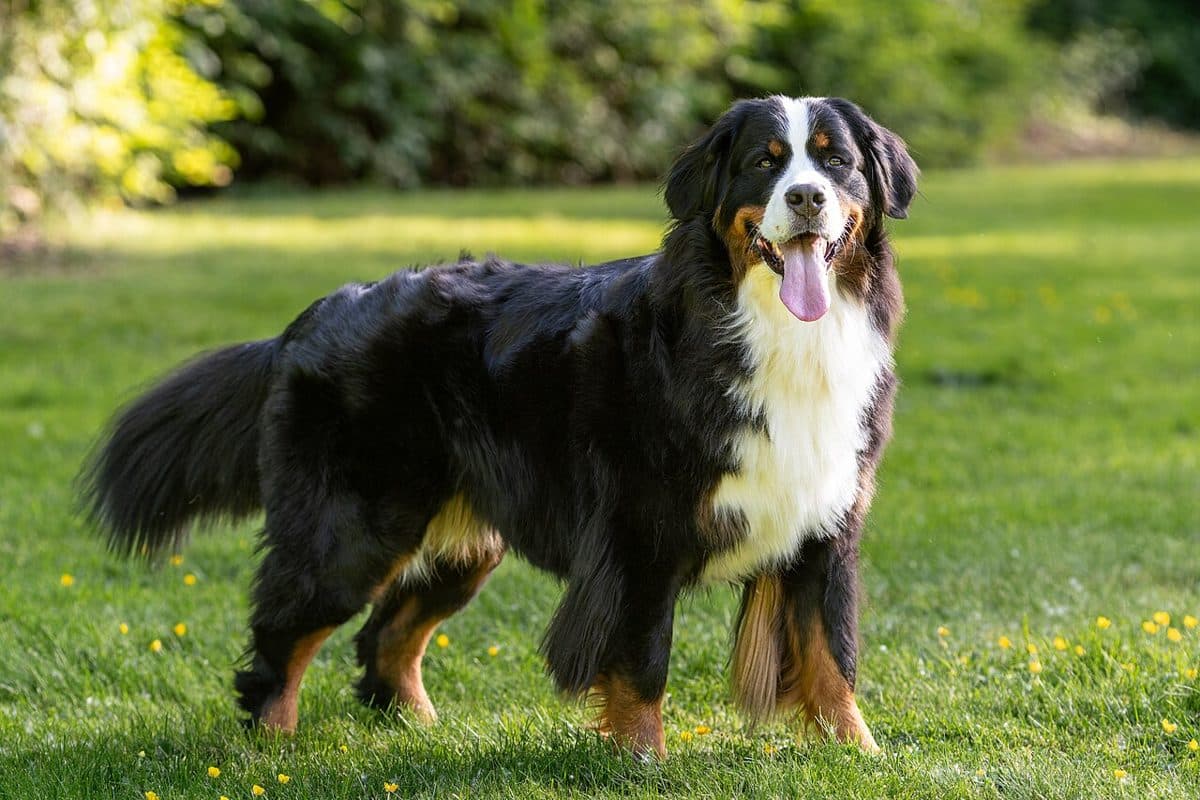
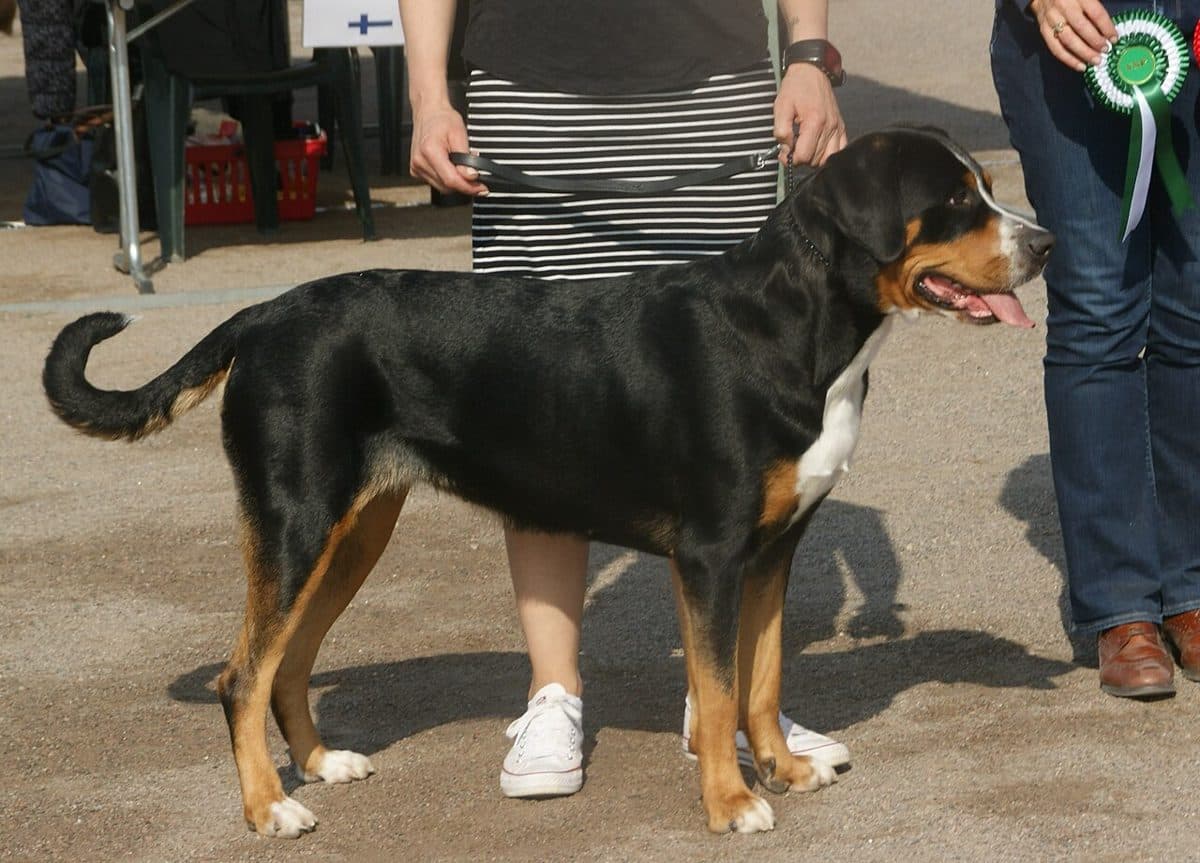
At a glance
Side by side.
| Trait | Bernese Mountain Dog | Greater Swiss Mountain Dog |
|---|---|---|
| Group | Working Dogs | Working Dogs |
| Size | Large | Very Large |
| Height | 23 to 28 inches | 23 to 28 inches |
| Weight | 70 to 115 pounds | 85 to 140 pounds |
| Life span | 6 to 10 years | 7 to 9 years |
| Energy | ||
| Exercise needs | ||
| Easy to train | ||
| Intelligence | ||
| Good with children | ||
| Good with other dogs | ||
| Friendly with strangers | ||
| Shedding | ||
| Easy to groom | ||
| Barking | ||
| Apartment living | ||
| First-time owners | ||
| Copes alone | ||
| Drooling | ||
| General health |
Ratings are 1 to 5, from our breed database. Every pet is an individual.
Background
Where they come from.
The Bernese Mountain Dog
A Swiss farm dog from the canton of Bern, used to pull carts of milk and cheese to market, drive cattle and guard farms. It is the only Swiss mountain dog with a long coat.
Its life expectancy is short, often 7 to 9 years, mostly because of high cancer rates.
Health to watch
- Histiocytic sarcoma and other cancers
- Hip and elbow dysplasia
- Degenerative myelopathy
- Bloat
The Greater Swiss Mountain Dog
The largest and oldest of the four Swiss mountain dogs, used as a draft dog to pull carts and herd cattle. It was rebuilt around 1900 by Albert Heim.
It is calm indoors but needs early training because of its size and strength.
Health to watch
- Splenic torsion
- Bloat
- Hip and elbow dysplasia
- Lick fits (gastric discomfort)
Key differences
Where they differ most.
Drooling
The Bernese Mountain Dog drools more than the Greater Swiss Mountain Dog.
Good with other dogs
The Greater Swiss Mountain Dog gets on better with other dogs than the Bernese Mountain Dog.
Friendly with strangers
The Bernese Mountain Dog is friendlier with strangers than the Greater Swiss Mountain Dog.
Shedding
The Bernese Mountain Dog sheds more than the Greater Swiss Mountain Dog.
Easy to groom
The Greater Swiss Mountain Dog is easier to groom than the Bernese Mountain Dog.
Copes alone
The Greater Swiss Mountain Dog copes better when left alone than the Bernese Mountain Dog.
Which to choose
Bernese Mountain Dog or Greater Swiss Mountain Dog?
Choose the Bernese Mountain Dog if…
- You have lots of visitors (it is friendlier with strangers)
- You’d like a calmer pet (it is calmer)
- You want a dog that is easier to train
- You want a dog that is quicker to learn
Choose the Greater Swiss Mountain Dog if…
- You want a dog that drools less
- You want a dog that gets on better with other dogs
- You want a more watchful dog (it is more reserved with strangers)
- You want a dog that sheds less
Questions.
Is the Bernese Mountain Dog or the Greater Swiss Mountain Dog bigger, and which lives longer?
The Greater Swiss Mountain Dog is the bigger breed, about 9 kg heavier on average. Individual pets vary, so meet the parents or the pet where you can.
Which is easier to train, the Bernese Mountain Dog or the Greater Swiss Mountain Dog?
The Bernese Mountain Dog is generally easier to train than the Greater Swiss Mountain Dog. Short, positive, reward-based sessions work best for both.
Which is better for families, the Bernese Mountain Dog or the Greater Swiss Mountain Dog?
Both are usually good with children when well socialised. Always supervise young children with any pet.
Which sheds less?
The Greater Swiss Mountain Dog sheds less than the Bernese Mountain Dog. No breed is completely hair-free; regular brushing helps with both.
What health problems do the Bernese Mountain Dog and Greater Swiss Mountain Dog have?
The Bernese Mountain Dog is prone to histiocytic sarcoma and other cancers, hip and elbow dysplasia, degenerative myelopathy. The Greater Swiss Mountain Dog is prone to splenic torsion, bloat, hip and elbow dysplasia. Both share a risk of hip and elbow dysplasia and bloat. Ask any breeder for the parents' health test results.
