United States · Cat breed
Bengal
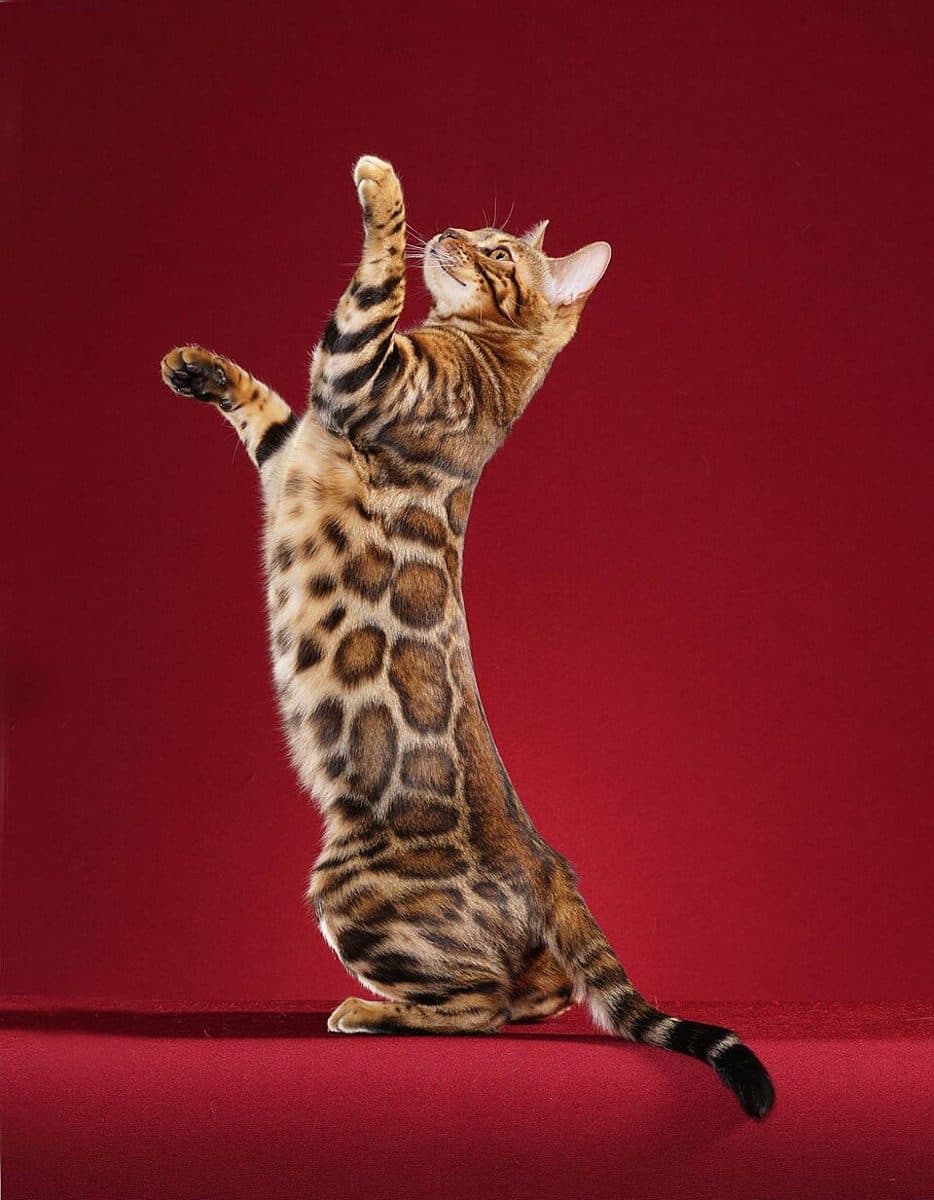
The Bengal is a cat breed from the United States, known for being alert, agile, energetic, with a typical lifespan of 12 to 15 years.
Reviewed to our editorial standards · Updated
- Origin
- United States
- Weight
- 6 to 12 lbs
- Life span
- 12 to 15 years
- Coat
- Often called hypoallergenic
- Lap cat
- Not usually
History and origin
Developed in the United States by Jean Mill in the 1970s and 1980s by crossing domestic cats with the wild Asian leopard cat. Its spotted or marbled coat often has a glitter sheen.
A typical adult weighs 6 to 12 lbs. Bengals are very active, often love water and need plenty of play and climbing space.
Personality
Expect a cat that seeks out laps and company. This is an energetic, athletic cat that gets bored without things to climb and chase. It dislikes being alone for long periods and may do best with a companion animal.
Children are often its favourite playmates. It usually accepts dogs well. It is very talkative.
Care and grooming
Give it cat trees, window perches and two or more play sessions a day with wand toys.
It is clever enough to learn tricks and open cupboards, so puzzle feeders and clicker games help.
A weekly brush is enough. Shedding is moderate. It is often described as hypoallergenic, but no cat is allergen-free, so spend time with the breed before committing.
Work out their needs with the free calorie calculator and water intake calculator.
Health and lifespan
Conditions seen more often in the Bengal include hypertrophic cardiomyopathy, progressive retinal atrophy (PRA-b) and pyruvate kinase deficiency.
Typical life expectancy is 12 to 15 years. Ask breeders whether parents are screened for heart disease by echocardiogram.
- Hypertrophic cardiomyopathy
- Progressive retinal atrophy (PRA-b)
- Pyruvate kinase deficiency
Ratings
Scored 1 to 5, where 5 is the most. Individual cats vary.
- Adaptability
- 5/5
- Affection
- 5/5
- Good with children
- 4/5
- Good with dogs
- 5/5
- Energy
- 5/5
- Grooming needs
- 1/5
- Health issues
- 3/5
- Intelligence
- 5/5
- Shedding
- 3/5
- Need for company
- 5/5
- Friendly with strangers
- 3/5
- Vocal
- 5/5
Is the Bengal right for you?
Often a good fit for
- Families with children
- Homes with a dog
Less suited to
- Homes where it would be alone all day
- Small spaces without climbing room
- People who want a quiet cat
Thinking of adopting? Read our guide to adopting a rescue or browse adoption on Hushku.
Bengal questions
Where does the Bengal come from?
Developed in the United States by Jean Mill in the 1970s and 1980s by crossing domestic cats with the wild Asian leopard cat. Its spotted or marbled coat often has a glitter sheen.
What health problems do Bengals have?
Hypertrophic cardiomyopathy, progressive retinal atrophy (PRA-b) and pyruvate kinase deficiency are the conditions most associated with the breed.
Is the Bengal hypoallergenic?
It is often described as hypoallergenic, but no cat is completely allergen-free. Spend time with the breed before deciding.
Is the Bengal good with children?
Usually, yes: it scores 4 out of 5 with children and 5 out of 5 with dogs. Give it a high perch or a room where it can retreat from noise.
How much grooming does the Bengal need?
A weekly brush is enough. It rates 1 out of 5 for grooming needs and 3 out of 5 for shedding.
Is the Bengal an active cat?
Yes. It scores 5 out of 5 for energy and 5 out of 5 for intelligence, so plan on climbing space and daily interactive play.
How long do Bengals live?
Typically 12 to 15 years. Regular checks for hypertrophic cardiomyopathy help catch problems early.

Own a Bengal?
Keep their vet visits, weight and reminders in Hushku, and share care with your household.
