At a glance
Side by side.
| Trait | Bengal | Ocicat |
|---|---|---|
| Origin | United States | United States |
| Weight | 6 to 12 lbs | 7 to 15 lbs |
| Life span | 12 to 15 years | 12 to 14 years |
| Lap cat | No | No |
| Hypoallergenic | Yes | Yes |
| Affection | ||
| Energy | ||
| Good with children | ||
| Good with dogs | ||
| Grooming needs | ||
| Shedding | ||
| Vocal | ||
| Needs company | ||
| Intelligence | ||
| Health issues |
Ratings are 1 to 5, from our breed database. Every pet is an individual.
Background
Where they come from.
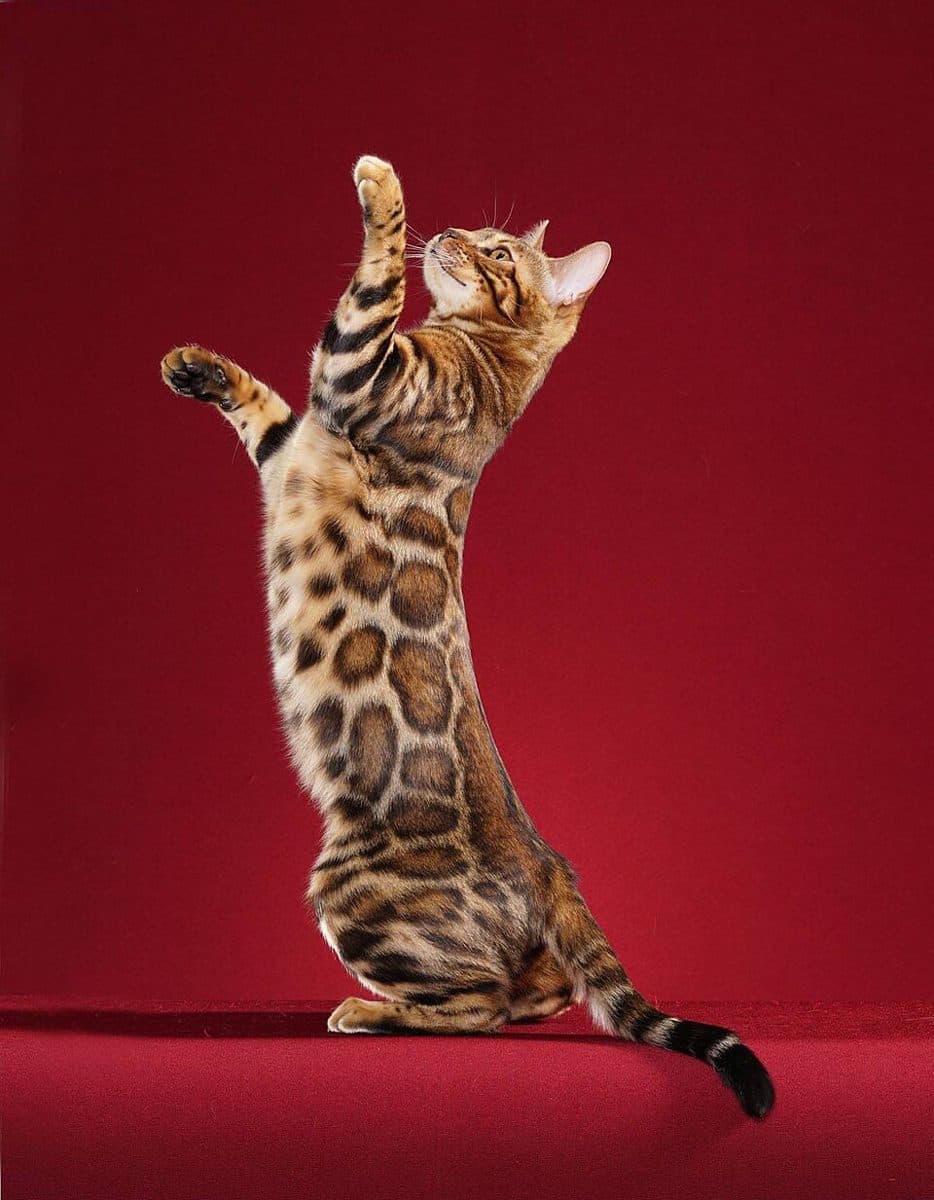
The Bengal
Developed in the United States by Jean Mill in the 1970s and 1980s by crossing domestic cats with the wild Asian leopard cat. Its spotted or marbled coat often has a glitter sheen.
Bengals are very active, often love water and need plenty of play and climbing space.
Health to watch
- Hypertrophic cardiomyopathy
- Progressive retinal atrophy (PRA-b)
- Pyruvate kinase deficiency
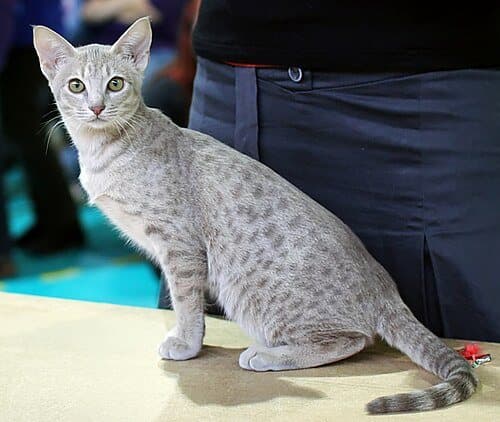
The Ocicat
Developed in Michigan in 1964 by Virginia Daly from Siamese, Abyssinian and American Shorthair cats. It looks wild but has no wild cat ancestry.
It is social and dog-like, and often learns tricks.
Health to watch
- Pyruvate kinase deficiency
- Renal amyloidosis
- Hypertrophic cardiomyopathy
Key differences
Where they differ most.
Vocal
The Bengal is more vocal than the Ocicat.
Which to choose
Bengal or Ocicat?
Questions.
Which is easier to train, the Bengal or the Ocicat?
They’re similarly easy to train. Short, positive, reward-based sessions work best for both.
Which is better for families, the Bengal or the Ocicat?
Both are usually good with children when well socialised. Always supervise young children with any pet.
Which sheds less?
They shed about the same amount. No breed is completely hair-free; regular brushing helps with both.
What health problems do the Bengal and Ocicat have?
The Bengal is prone to hypertrophic cardiomyopathy, progressive retinal atrophy (PRA-b), pyruvate kinase deficiency. The Ocicat is prone to pyruvate kinase deficiency, renal amyloidosis, hypertrophic cardiomyopathy. Both share a risk of hypertrophic cardiomyopathy and pyruvate kinase deficiency. Ask any breeder for the parents' health test results.
