Dog breed comparison
Labrador Retriever vs Boxer
How the two compare on size, temperament, training, grooming and health, and which suits your home.
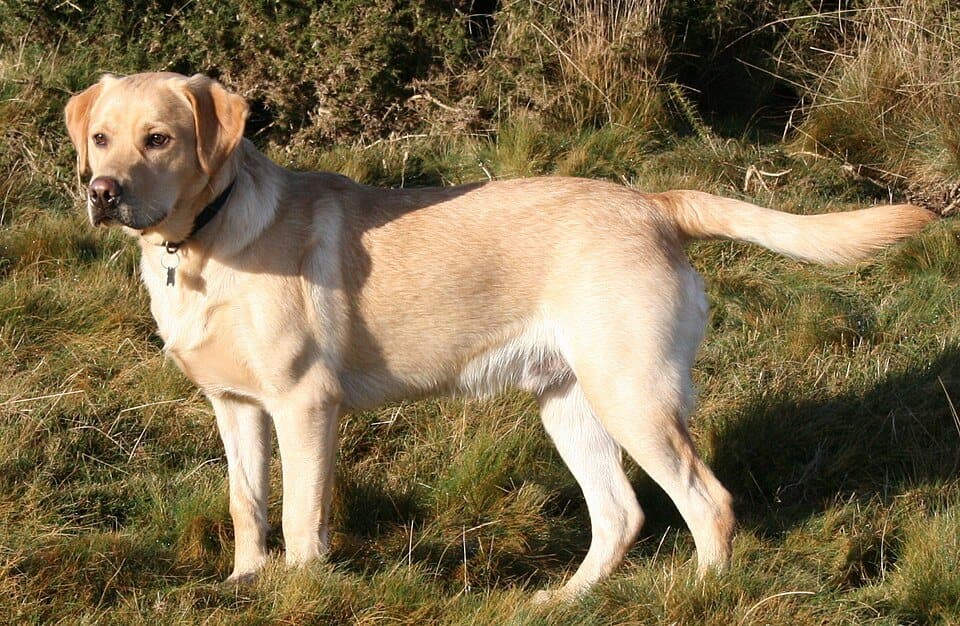
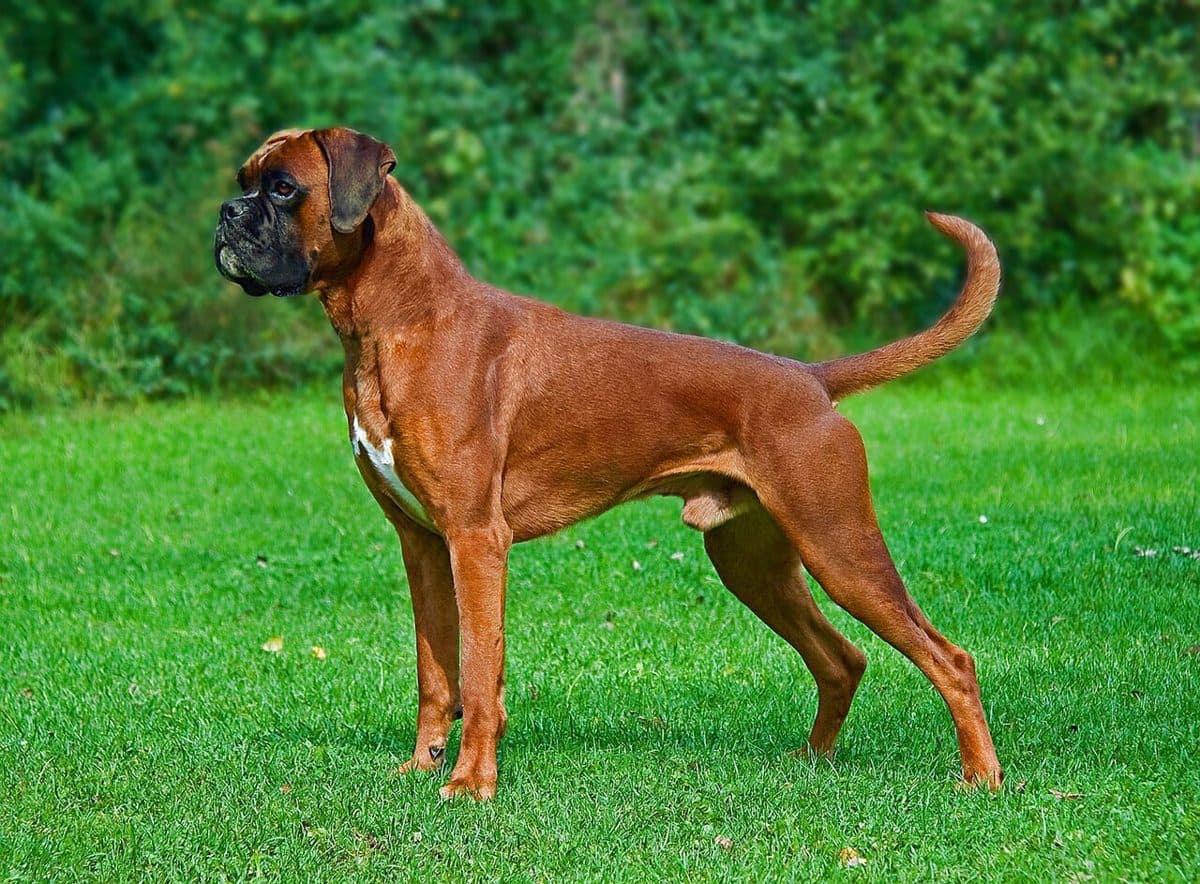
At a glance
Side by side.
| Trait | Labrador Retriever | Boxer |
|---|---|---|
| Group | Sporting Dogs | Working Dogs |
| Size | Large | Large |
| Height | 21 to 24 inches | 21 to 25 inches |
| Weight | 55 to 80 pounds | 60 to 70 pounds |
| Life span | 10 to 12 years | 10 to 12 years |
| Energy | ||
| Exercise needs | ||
| Easy to train | ||
| Intelligence | ||
| Good with children | ||
| Good with other dogs | ||
| Friendly with strangers | ||
| Shedding | ||
| Easy to groom | ||
| Barking | ||
| Apartment living | ||
| First-time owners | ||
| Copes alone | ||
| Drooling | ||
| General health |
Ratings are 1 to 5, from our breed database. Every pet is an individual.
Background
Where they come from.
The Labrador Retriever
Descended from the St John's water dog of Newfoundland, which helped fishermen haul nets and retrieve fish. English aristocrats such as the Earls of Malmesbury refined it into a gundog in the 1800s.
Many Labradors carry a POMC gene variant linked to constant hunger, so portion control matters.
Health to watch
- Hip and elbow dysplasia
- Obesity
- Exercise-induced collapse
- Progressive retinal atrophy
- Ear infections
The Boxer
Developed in Munich in the late 1800s from the Bullenbeisser, a mastiff-type hunting dog, crossed with English Bulldogs. Boxers were among the first breeds used as police and military dogs in Germany.
It is famously clownish and stays playful well past puppyhood.
Health to watch
- Boxer cardiomyopathy (ARVC)
- Mast cell tumours and other cancers
- Hip dysplasia
- Degenerative myelopathy
- Brachycephalic airway issues
Key differences
Where they differ most.
Apartment living
The Boxer copes better in an apartment than the Labrador Retriever.
Good with other dogs
The Labrador Retriever gets on better with other dogs than the Boxer.
Easy to train
The Labrador Retriever is easier to train than the Boxer.
Intelligence
The Labrador Retriever is quicker to learn than the Boxer.
Good with children
The Labrador Retriever is better with children than the Boxer.
Friendly with strangers
The Labrador Retriever is friendlier with strangers than the Boxer.
Which to choose
Labrador Retriever or Boxer?
Choose the Labrador Retriever if…
- You want a dog that gets on better with other dogs
- You want a dog that is easier to train
- You want a dog that is quicker to learn
- You want a dog that is better with children
Choose the Boxer if…
- You want a dog that copes better in an apartment
- You want a more watchful dog (it is more reserved with strangers)
- You want a dog that sheds less
- You want a dog that barks less
Questions.
Which is easier to train, the Labrador Retriever or the Boxer?
The Labrador Retriever is generally easier to train than the Boxer. Short, positive, reward-based sessions work best for both.
Which is better for families, the Labrador Retriever or the Boxer?
The Labrador Retriever is usually the better fit for families with children, though a well-socialised Boxer can be great too. Always supervise young children with any pet.
Which sheds less?
The Boxer sheds less than the Labrador Retriever. No breed is completely hair-free; regular brushing helps with both.
What health problems do the Labrador Retriever and Boxer have?
The Labrador Retriever is prone to hip and elbow dysplasia, obesity, exercise-induced collapse. The Boxer is prone to boxer cardiomyopathy (ARVC), mast cell tumours and other cancers, hip dysplasia. Ask any breeder for the parents' health test results.
